
This article expands on a short post I shared on LinkedIn about Spain’s double World Cup win. Readers there are already swapping their own reflections. Add yours to that thread, then read the full breakdown below.
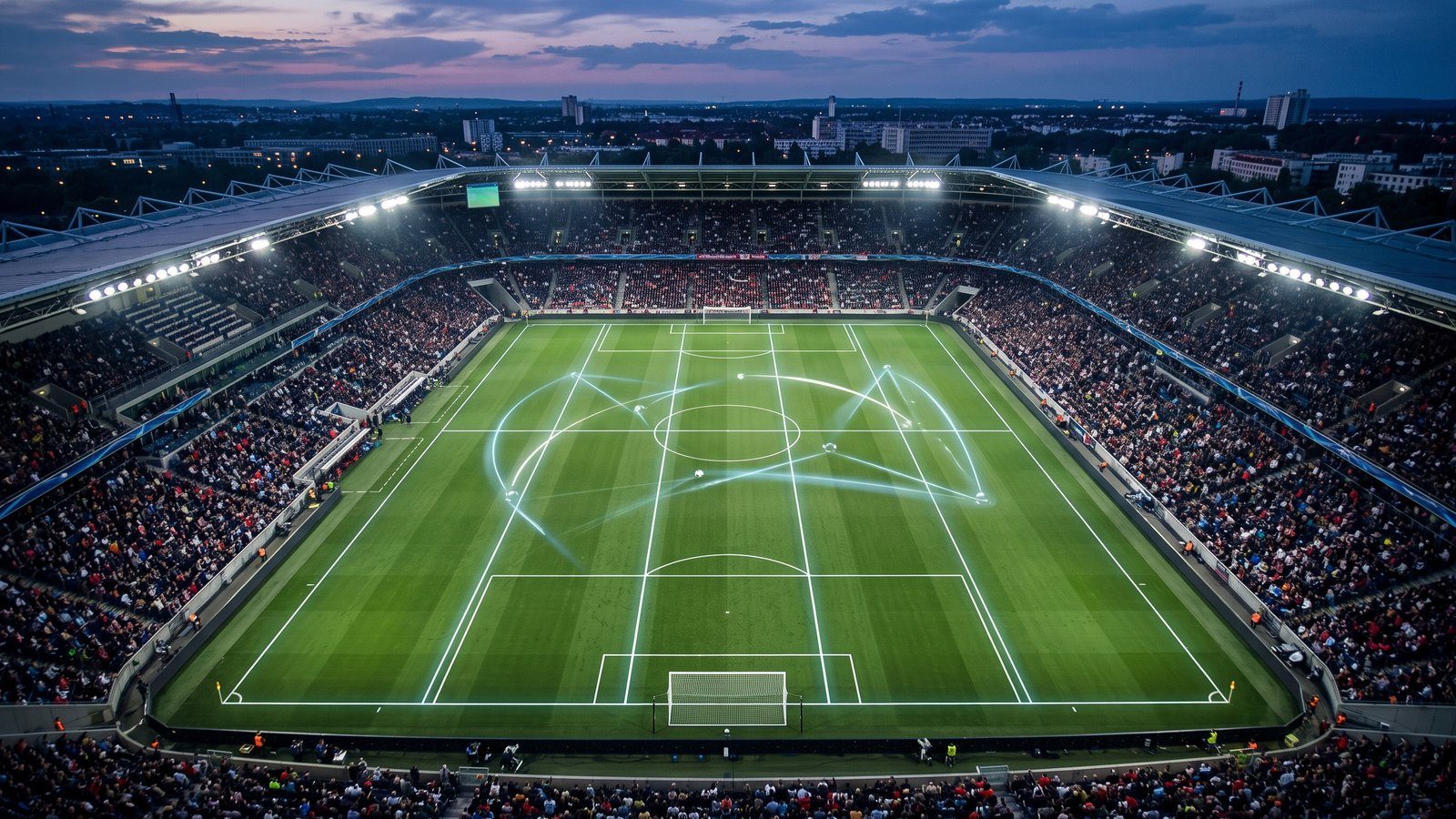
The 2026 World Cup final needed 106 minutes to produce a goal. When it came, it was not scored by Lamine Yamal or Lionel Messi, the two names on every back page. It was scored by a substitute, Ferran Torres, from a headed knock-down by Nico Williams, and it defeated a team that failed to register a single shot on target across 120 minutes of football.
Here is the detail that should stop every operations leader mid-scroll. With that goal, Spain became the first nation in football history to hold the men’s and the women’s World Cup at the same time. Two different squads. Two different coaching staffs. Two different tournaments, three years apart. The same result. When an outcome repeats across different teams, different people, and different conditions, a Lean practitioner stops crediting luck and starts looking for the process. So this article treats Spain the way we would treat any benchmark organization: as an operational excellence case study, broken down lesson by lesson.
7 Insights at a Glance
If you only have ninety seconds, here are the seven operational excellence lessons worth remembering.
- This is a system story, not a talent story. Spain’s men’s and women’s teams run the same playing doctrine, taught the same way, from under-9 academies to the senior squads. The tactical variance most federations tolerate has been engineered out.
- Quality is built in at age nine, not inspected in at 25. Training formats like FUNino and a formal U9-12 curriculum of 96 standardized practices develop perception and decision-making before players reach their teens. Prevention, not detection.
- Talent flows through a managed supply chain. FC Barcelona’s La Masia academy alone put 9 players in the 2026 men’s final and 11 in the 2023 women’s final. Athletic Club’s Lezama academy supplied three more 2026 starters.
- Leadership is promoted from within. Luis de la Fuente spent a decade inside the RFEF youth system before taking the senior job. The women’s bench passed from Jorge Vilda to his long-time assistant Montse Tomé, then to U-23 coach Sonia Bermúdez. No outside saviors, no philosophical resets.
- Middle management density is the moat. Spain has roughly 2,140 UEFA Pro licensed coaches. England has about 203. That is one elite coach per 21,824 citizens versus one per 263,515.
- The entire system is instrumented with data and AI. La Liga’s Mediacoach platform processes 3.5 million tracking data points per match on Microsoft Azure, while the federation’s WIMU PRO wearables capture 20,000 data points per second per player.
- When the system failed its people, Spain fixed the system. A player revolt, a strike, a negotiated pay floor, governance reform, and a single unified team brand transformed the women’s program from neglected to world champion.
Table of Contents
- What Is Operational Excellence?
- Key Facts at a Glance
- Lesson 1: Standard Work Wins World Cups
- Lesson 2: Build Quality In at Age Nine
- Lesson 3: Treat Talent Like a Supply Chain
- Lesson 4: Promote From Within, Protect the Knowledge
- Lesson 5: Middle Management Is a Competitive Weapon
- Lesson 6: Instrument Everything: The AI Layer
- Lesson 7: When the System Fails People, Fix the System
- What I’m Watching Next
- Build the Skills That Matter in the AI Era
- Frequently Asked Questions
- About the Author
- Citations and References
What Is Operational Excellence?
Operational excellence is the discipline of designing, standardizing, measuring, and continuously improving the way work happens, so that outcomes stop depending on heroes. It is the difference between an organization that wins because one brilliant individual showed up, and an organization that wins because the process itself makes winning the most probable outcome. At AIGPE we compress it into a belief we teach in every program: don’t blame the people. Fix the system, the process, and the root cause. Build quality in instead of inspecting it in.
Spain’s football federation, the RFEF, has spent nearly four decades applying operational excellence to the game of football. The rest of this article walks through their playbook, lesson by lesson, with the numbers to back it.
The one line to remember: Spain didn’t win two World Cups. Their system did.
Key Facts at a Glance
Here is the operational excellence scorecard behind the story.
| Attribute | Detail |
|---|---|
| Historic milestone | First nation ever to hold the men’s and women’s FIFA World Cup titles simultaneously |
| Women’s title | Beat England 1-0 on August 20, 2023, at Accor Stadium, Sydney. Olga Carmona scored |
| Men’s title | Beat Argentina 1-0 after extra time on July 19, 2026, at MetLife Stadium, New Jersey. Ferran Torres scored in the 106th minute |
| 2026 final dominance | 65% possession, 20 shots to 2, and Argentina finished with zero shots on target |
| Unbeaten streak | 38 matches unbeaten (29 wins, 9 draws), a record for a European men’s national team |
| Defensive record | 1 goal conceded across all 8 matches of the 2026 tournament, an all-time record for a World Cup champion |
| 2026 individual awards | Rodri (Golden Ball), Unai Simón (Golden Glove), Pau Cubarsí (Best Young Player) |
| Concurrent trophies | Men: World Cup 2026, Euro 2024, Olympic gold 2024. Women: World Cup 2023, Nations League 2024 |
Lesson 1: Standard Work Wins World Cups
Every Six Sigma project begins with the same enemy: variation. Spain identified theirs decades ago. It was tactical variation, the constant reinvention of playing identity that most national teams undergo every time a coach changes.
Their answer is a doctrine called Juego de Posición, positional play. It divides the pitch into a strict geometric grid: five vertical lanes and multiple horizontal lines, with one operating rule that functions exactly like standard work on a factory floor. No two players may occupy the same vertical lane or the same horizontal line at the same time. That single constraint mathematically guarantees open diagonal passing lanes, generates constant triangle formations, and ensures no defender can press two Spaniards at once. Ball flow is optimized the way a well-designed cell optimizes material flow.
The remarkable part is not the doctrine itself. It is the deployment. The RFEF enforces this identity from under-9 level through every age group, in both the men’s and the women’s programs. American World Cup winner Carli Lloyd described it better than any consultant could:
“This is the only country that starts a philosophy and an identity at a young age, and they’re all doing the same things from 9 years old and up, both the men’s and women’s side.”
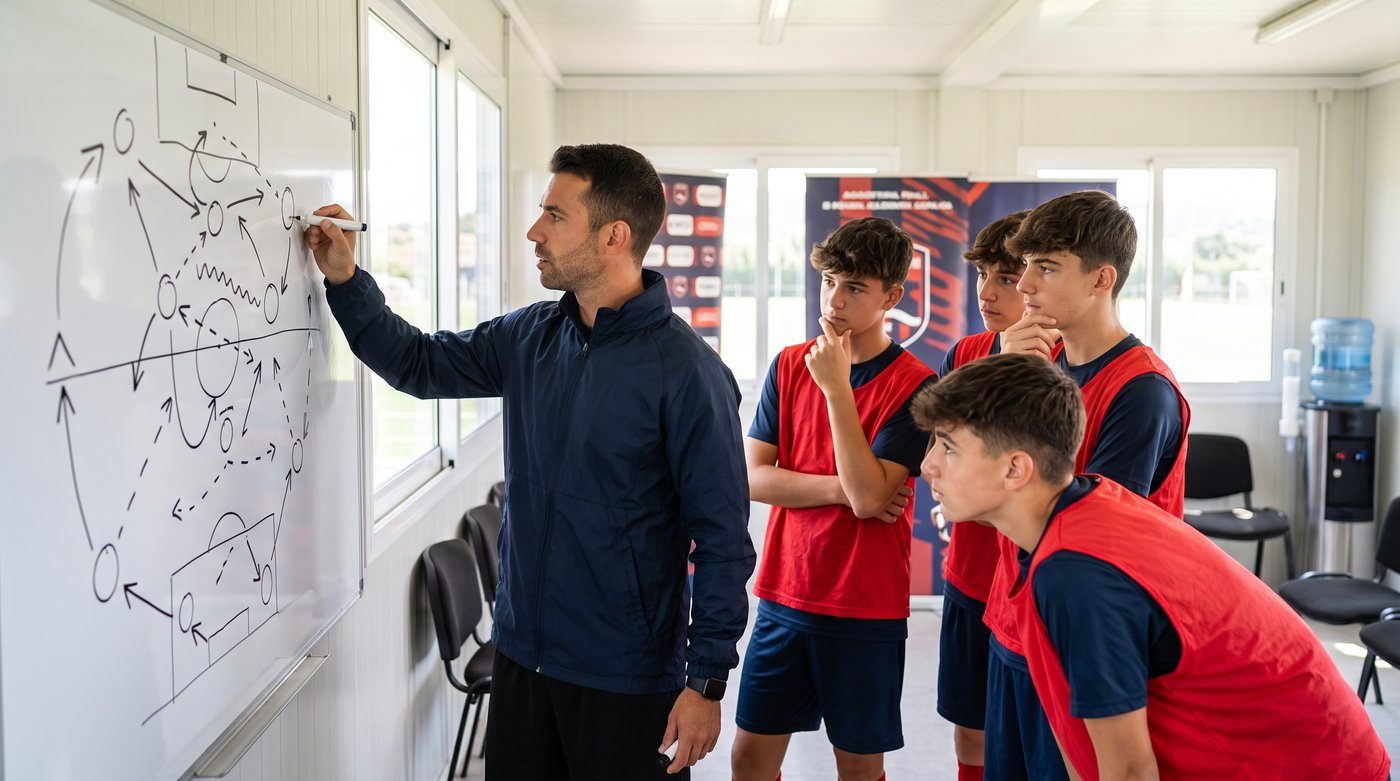
A player promoted from the U-15s to the U-17s, or from the U-21s to the senior team, changes shirt size and nothing else. The process map stays identical; only the execution speed increases. When a winger gets injured, the replacement steps into the same spatial node and runs the same standard operating procedure. The system, not any individual, is the star. That is operational excellence wearing football boots.
Lesson 2: Build Quality In at Age Nine
Inspection finds defects. Design prevents them. Spain applied that quality principle to human development.
The intellectual architecture came from an unexpected source: Horst Wein, a German coach who worked with the RFEF for over 20 years. Wein built a Game Intelligence Model around four sequential cognitive stages: perception, understanding, decision-making, and execution. Notice what comes last. Technique is the fourth step, not the first. Spain trains the brain before the boot.
The delivery vehicle for eight and nine year olds is a format called FUNino: three versus three, on a small pitch, with four mini-goals and no goalkeepers. The design choices are deliberate operational engineering. Four goals force constant visual scanning. The wide goal placement stretches the field and punishes passive defending. Two attacking options at all times doubles the decision load on every touch. It is a training environment purposely designed so the desired behavior, scanning and deciding, cannot be avoided.
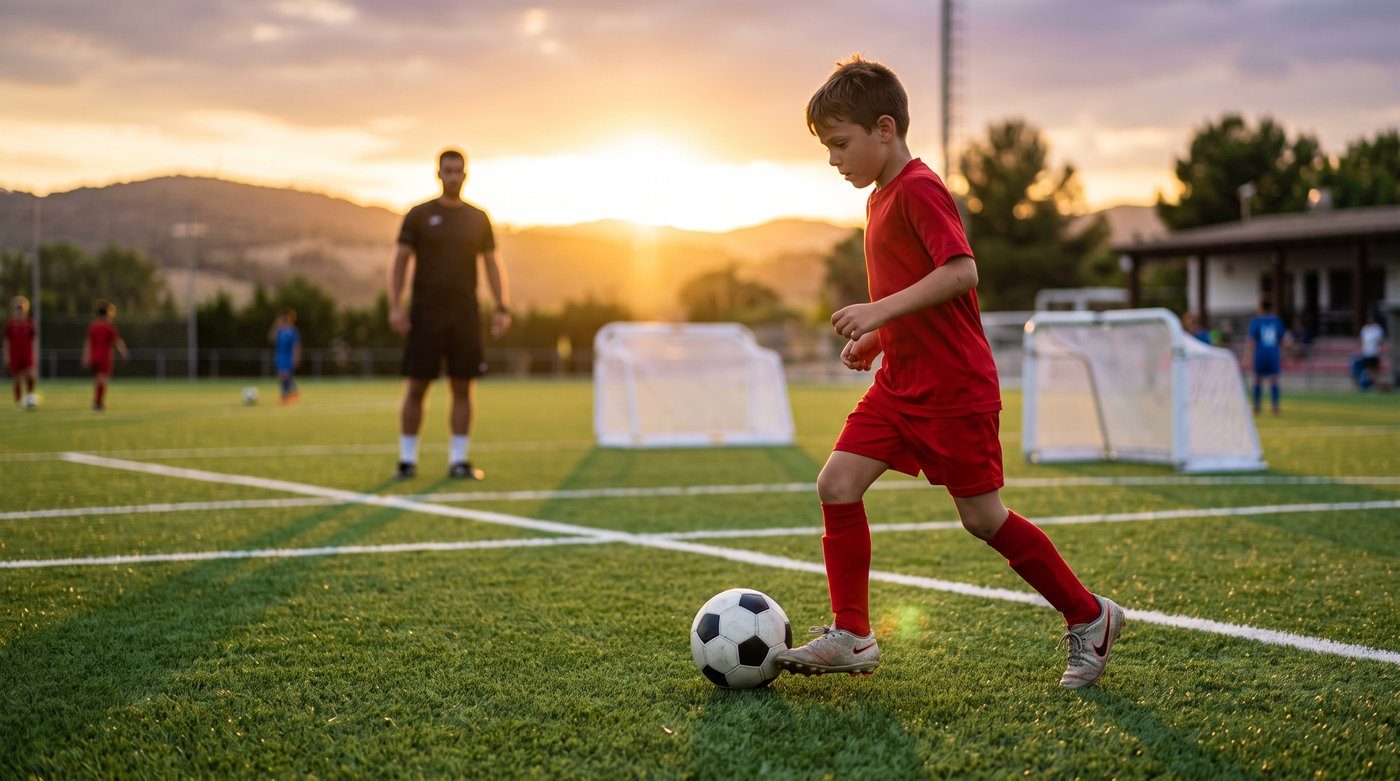
Above this sits a formal curriculum. Eduardo Valcárcel, director of the RFEF Coaching School, authored the federation’s official U9-12 coaching program: 96 specified practices, every single one requiring a ball, so technical skill is always built under game pressure rather than in sterile isolation. Former RFEF coaching school director Ginés Meléndez, who helped embed these principles, put the outcome plainly: the boys spotted at nine are the same boys in the under-15 national side three years later.
This is mistake-proofing, a cornerstone of operational excellence, applied to talent development. By the time a Spanish player reaches the senior team, the defects that plague other football cultures, poor scanning, slow decisions, positional indiscipline, were designed out years earlier.
Lesson 3: Treat Talent Like a Supply Chain
A world-class process still fails with unreliable inputs. Spain solved supply the way Lean organizations do: with deeply integrated, quality-assured supplier networks. In football, those suppliers are club academies.
The apex supplier is FC Barcelona’s La Masia. Nine La Masia graduates took the pitch in the 2026 men’s final: eight for Spain, including Lamine Yamal, Gavi, Pau Cubarsí, and Dani Olmo, plus one for Argentina named Lionel Messi. If that number sounds familiar, it should. Spain’s first World Cup win in 2010 was also powered by nine La Masia graduates. Sixteen years apart, same supplier, same output. In operational excellence terms, that is process capability.
The women’s numbers are even stronger. Eleven players connected to La Masia or FC Barcelona featured in the 2023 final: nine for Spain, two for England. And the supply chain expanded deliberately: La Masia opened its residency program to female players in August 2021, an investment that matured into consecutive Ballon d’Or Féminin winners Alexia Putellas and Aitana Bonmatí.
Spain also avoids single-supplier risk. Athletic Club’s Lezama academy delivered three starters for the 2026 campaign: goalkeeper Unai Simón, defender Aymeric Laporte, and winger Nico Williams. Most striking of all, the 2026 squad contained zero current Real Madrid players, a first in the tournament era. The selection system optimizes for fit with the doctrine, not for club prestige. How many organizations can say their hiring does the same?
Lesson 4: Promote From Within, Protect the Knowledge
Most federations respond to failure the way struggling companies respond to a bad quarter: fire the leader, hire an outsider, reset the strategy, lose the institutional knowledge, repeat. Spain treats its head coach roles as internal promotions, and the continuity compounds. Operational excellence depends on institutional memory, and Spain protects it deliberately.
Luis de la Fuente joined the RFEF youth setup in 2013. His path reads like a succession plan written ten years in advance:
| Year | Milestone |
|---|---|
| 2015 | UEFA European U-19 Championship, winner |
| 2019 | UEFA European U-21 Championship, winner |
| 2021 | Olympic silver medal with the U-23 squad |
| 2022 | Promoted to senior head coach |
| 2023 | UEFA Nations League, winner |
| 2024 | Euro 2024, winner |
| 2026 | FIFA World Cup, winner |
By the time he reached the senior job, de la Fuente had already coached the core of his future World Cup squad, including Mikel Oyarzabal, Dani Olmo, Fabián Ruiz, and Unai Simón, during their formative years. He installed nothing. He continued a decade-long conversation. Even his beaten opponent understood what he was looking at. Argentina’s Lionel Scaloni said before the final: “Everything we see in his national team is what we hope to see in ours.”
The women’s program held the same line under far harder conditions. When Jorge Vilda was dismissed after the 2023 win amid the federation’s governance crisis, the RFEF promoted Montse Tomé, his assistant since 2018, who promptly won the inaugural 2024 UEFA Women’s Nations League. When leadership changed again in August 2025, the role went to Sonia Bermúdez, already coaching Spain’s U-23 women. Three transitions, zero ideological resets.
| Dimension | Superstar-first federations | Spain’s system-first model |
|---|---|---|
| Tactical identity | Resets with each new manager | One doctrine from U-9 to senior level |
| Succession | External hires after each failure | Internal promotion, every time |
| Dependence | Collapses when the star is marked or injured | Replacement runs the same standard work |
| Recent output | Cyclical peaks and rebuilds | 38 matches unbeaten, two concurrent World Cups |
Lesson 5: Middle Management Is a Competitive Weapon
A standard is worthless if nobody on the front line can teach it. This is where Spain’s advantage becomes almost unfair, and it is the least glamorous number in this entire story.
| Measure | Spain | England |
|---|---|---|
| UEFA Pro licensed coaches | ~2,140 | ~203 |
| UEFA ‘A’ licensed coaches | 12,720+ | 1,161 |
| Citizens per Pro licensed coach | 21,824 | 263,515 |
Read that middle row again. Spain fields roughly ten times England’s stock of elite coaches in absolute terms, and a twelvefold advantage per capita. In operational terms, these coaches are the middle managers and front-line supervisors of the talent factory. They are the people who ensure the U-9 curriculum in a small Andalusian town is executed to the same standard as at La Masia.
Every operational excellence program we have ever supported at AIGPE succeeds or fails on this exact layer. Executives set direction and front-line teams do the work, but the standard lives or dies with the people in between: the team leads, the supervisors, the coaches. Spain simply out-invested everyone on Earth in that layer, for decades, and then collected the compound interest in trophies.
Lesson 6: Instrument Everything: The AI Layer
If Lessons 1 through 5 built the process, this is the measurement system bolted on top of it, and it is where Spain’s story becomes a Quality 4.0 story.
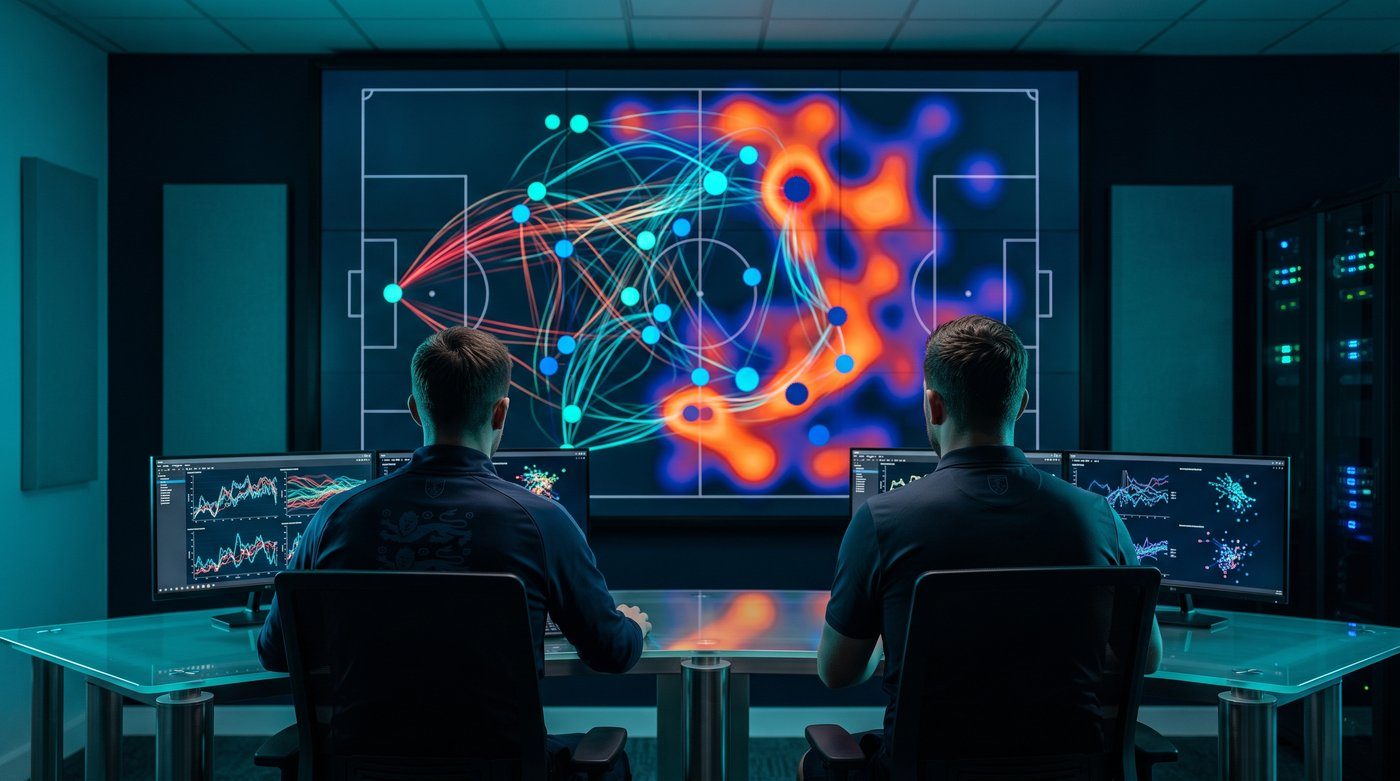
Start at the league level. La Liga’s proprietary Mediacoach platform, built on a deep partnership with Microsoft, runs 16 to 19 high-resolution optical tracking cameras in every stadium. They record every player’s position 25 times per second, generating more than 3.5 million data points per match. Azure machine learning models turn that telemetry into live tactical intelligence, including a Goal Probability model that scores the danger of any attacking sequence within 30 seconds of it happening. This is operational excellence instrumentation at broadcast speed. Some of this output reaches fans through the Beyond Stats portal; the more consequential share reaches coaching staffs, who use it to analyze passing networks and defensive line breaks.
The federation runs its own telemetry stack. Spain’s national teams use WIMU PRO wearable trackers, developed by the Spanish firm Realtrack Systems and now part of Hudl. Each device carries four 3D accelerometers, three gyroscopes, a magnetometer, and a barometer, capturing up to 20,000 data points per second per athlete, with GPS outdoors and ultra-wideband positioning indoors. During tournament preparation, Spain’s fitness staff monitor metabolic power and sprint loads in real time and adjust training volume the same day, managing each player’s acute-to-chronic workload ratio the way a control chart manages a critical process variable. One goal conceded in eight World Cup matches is not only a defensive scheme. It is load management working.
The analytical pipeline is institutionalized too. Spanish programs now train specialist analysts in Python, R, and machine learning specifically for football, feeding club and federation staffs that design set-piece routines from opponent tracking data. The lesson for any operations leader is uncomfortable but clear: Spain does not treat data as a report about the past. It treats data as a real-time control system, which is exactly how mature organizations approach AI-powered root cause analysis today.
Lesson 7: When the System Fails People, Fix the System
This lesson matters most, because for years Spain’s women’s program was proof of the opposite: world-class inputs wasted by a broken system.
In 2022, fifteen national team players, “Las 15,” withdrew from selection in protest over poor management, inadequate preparation, and an environment they described as harmful to their health. In September 2023, weeks after winning the World Cup, Liga F players went on strike over minimum wages. The federation’s own president was dismissed in disgrace following the 2023 final.
Watch what happened next, because it is a masterclass in operational excellence and root cause thinking. The response was not to blame individuals and move on. The structures changed. Liga F had been formally professionalized ahead of the 2022-23 season; the strike settlement then established a guaranteed pay floor of €17,000, rising to €21,000 by 2025, converting part-time athletes into full-time professionals. La Masia’s 2021 decision to admit female residents rebuilt the supply chain. Governance was reformed. And in a small change that says everything, the RFEF dropped the gendered qualifier from the team’s name entirely. Both squads now compete under the identical brand: Selección Española de Fútbol. Not a women’s division of the product. The product.
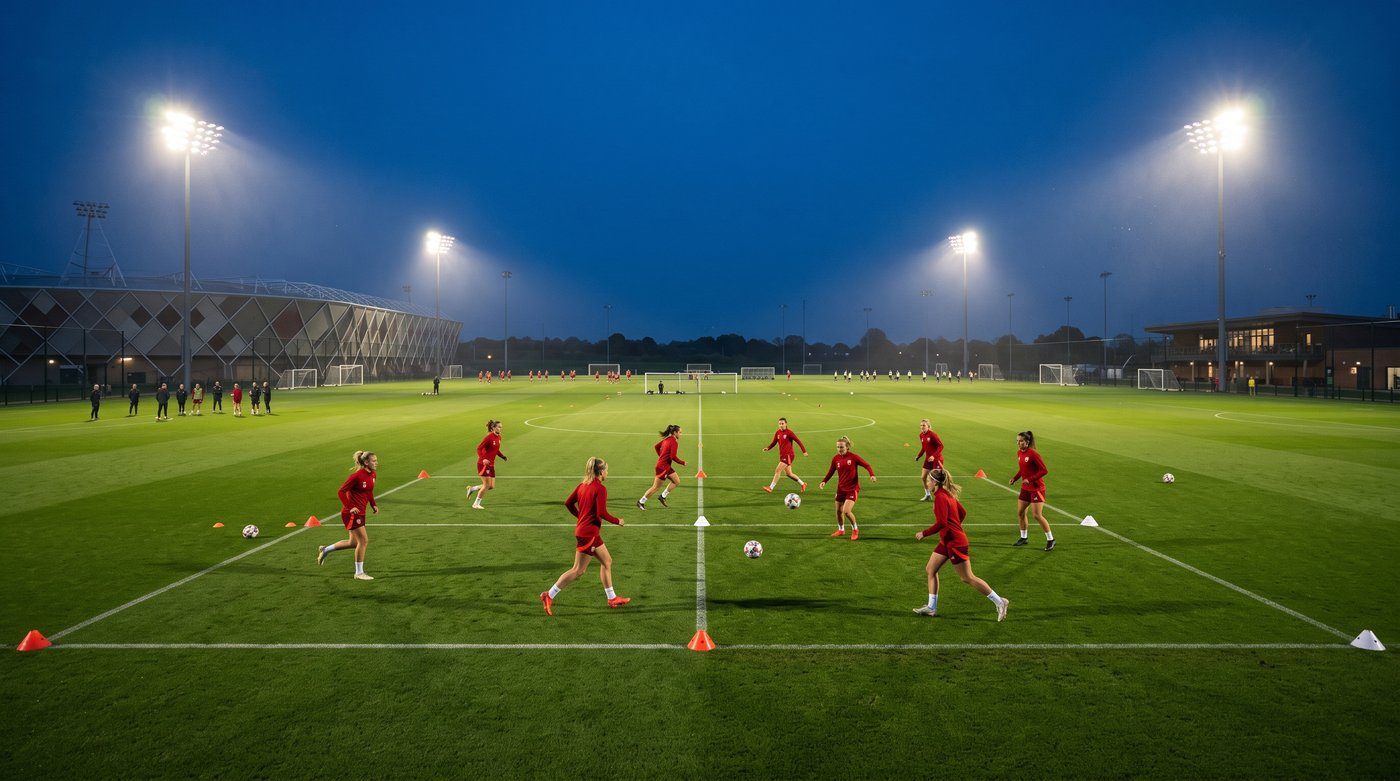
Aitana Bonmatí, the 2023 Golden Ball winner, captured the standard that culture now sets: “Most teams would be satisfied just winning, but we’re expected, and we expect ourselves, to win and play well.”
The results answered every question. World Cup 2023. Nations League 2024. A generation of the best players on the planet. When people underperform, our instinct is to fix the people. Spain’s women were never the problem. The system was, and fixing it produced champions. That is the single most transferable Kaizen lesson in this entire story.
What I’m Watching Next
Four signals will tell us whether Spain’s operational excellence moat holds.
- England’s coaching investment. England knows its 203-versus-2,140 problem. If the FA meaningfully scales coach education, the gap in the one metric that matters most starts to close, though on a 10 to 15 year lag.
- The AI set-piece arms race. Tracking data and machine learning are commoditizing fast. Federations that cannot match Spain’s academy depth will try to buy tactical edges through analytics, the way smaller manufacturers leapfrog with automation.
- The 2027 Women’s World Cup. Spain arrives as reigning champion with a new head coach from inside the pipeline. It will be the cleanest test yet of whether the system outperforms any individual leader.
- Talent raids on the RFEF itself. The most valuable transfer market in football right now is not players. It is Spanish methodology and the people who carry it. Watch how many federations hire Spanish technical directors in the next two years.
Build the Skills That Matter in the AI Era
Spain spent three decades building capability before collecting its trophies. Building yours can start this week. These AIGPE certification tracks map directly to the operational excellence lessons above.
AI-Powered Certification Track for Quality 4.0
- ChatGPT and Six Sigma: AI Visualization Beginner
- ChatGPT and Six Sigma: AI Visualization Proficient
- AI-Powered WBS Specialist Certification
- Certified AI Project Scheduling Masterclass
- Certified AI-Powered Root-Cause Analysis Specialist
Lean Certification Track
- Certified Lean Specialist
- Certified Lean Expert
- Certified Kaizen Event Specialist
- Certified Value Stream Mapping (VSM) Specialist
- Certified 5S Specialist
- Certified Mistake-Proofing (Poka-Yoke) Specialist
Six Sigma Certification Track
- Certified Lean Six Sigma White Belt
- Certified Lean Six Sigma Yellow Belt
- Certified Lean Six Sigma Green Belt
- Lean Six Sigma Black Belt: Phase 0 and 1
Browse the full catalog on our certifications page.
Frequently Asked Questions
Is Spain really the first country to hold both World Cups at the same time?
Yes. Spain’s women won on August 20, 2023, and the men followed on July 19, 2026, while the women’s title was still active. A chronological audit of every men’s and women’s champion since the Women’s World Cup began in 1991 confirms no previous overlap by any nation.
What is Juego de Posición?
Positional play, Spain’s standardized playing doctrine. It divides the pitch into five vertical lanes and several horizontal lines, and forbids two players from occupying the same lane or line simultaneously. The rule guarantees passing options and is taught identically from under-9 level to the senior teams.
What is FUNino?
A 3v3 training format for eight and nine year olds played with four mini-goals and no goalkeepers. Its design forces constant scanning and doubles decision-making load, developing game intelligence before physical attributes matter.
How does Spanish football actually use AI?
Two main layers. La Liga’s Mediacoach platform uses 16 to 19 stadium cameras and Microsoft Azure machine learning to process over 3.5 million data points per match, including a Goal Probability model computed within 30 seconds of the action. The federation separately uses WIMU PRO wearables capturing up to 20,000 data points per second per player for real-time load management and injury prevention.
What can my organization copy from Spain’s operational excellence model?
Four operational excellence moves that require no stadium: standardize your core process and teach one identity at every level, develop and promote leaders from within, invest disproportionately in the middle layer that teaches the standard, and instrument your process with real-time data instead of month-end reports.
Who scored in the two finals?
Olga Carmona scored the winner against England in the 2023 women’s final in Sydney. Ferran Torres scored the winner against Argentina in the 106th minute of the 2026 men’s final in New Jersey.
About the Author
Rahul G. Iyer is an AI-Driven Transformation Leader and Founder and CEO of AIGPE®. With more than 23 years of experience and 700+ personally executed Six Sigma, process-improvement, Operational Excellence and transformation projects, he turns practical expertise into professional courses, corporate training, private AI coaching, keynotes and The M3 Podcast Show. His learning content has generated 1M+ cumulative learner enrollments and reached 198 countries.
Citations and References
- The Guardian: Spain win the World Cup after Ferran Torres dethrones 10-man Argentina, https://www.theguardian.com/football/2026/jul/19/spain-win-world-cup-ferran-torres-10-man-argentina-extra-time
- AP News: Spain wins the World Cup by beating Argentina 1-0, https://apnews.com/article/argentina-spain-world-cup-final-score-messi-fccc26aa12d9226e63d06b601b770617
- Al Jazeera: Spain vs Argentina 1-0 (aet), FIFA World Cup 2026 final, https://www.aljazeera.com/sports/liveblog/2026/7/19/spain-vs-argentina-live-2026-fifa-world-cup-final
- Hindustan Times: Spain end Argentina’s reign as Ferran Torres strikes in extra time, https://www.hindustantimes.com/sports/football/spain-end-argentinas-reign-as-ferran-torres-strikes-in-extra-time-to-win-world-cup-after-16-years-101784496633006.html
- Times of India: 38 and counting: Spain are World Champions and the greatest unbeaten team in football history, https://timesofindia.indiatimes.com/sports/football/fifa-world-cup/fifa-wc-2026-38-and-counting-spain-are-world-champions-and-the-greatest-unbeaten-team-in-football-history/articleshow/132503467.cms
- England Football: Spain 1-0 England, FIFA Women’s World Cup Final match centre, https://www.englandfootball.com/england/womens-senior-team/fixtures-results/2023/england-women-v-spain-2023-fifa-world-cup-final-match-centre-report-sunday-20-august
- Olympics.com: FIFA Women’s World Cup 2023 complete list of award winners, https://www.olympics.com/en/news/fifa-womens-world-cup-2023-complete-list-award-winners
- FOX Sports: How Spain’s Men’s And Women’s National Teams Rose Above The Rest Of The World, https://www.foxsports.com/stories/soccer/world-cup-spain-men-women-lamine-yamal-aitana-bonmati-alexia-putellas
- FC Barcelona: Nine from La Masia in World Cup Final, https://www.fcbarcelona.com/en/news/4537154/nine-from-la-masia-in-world-cup-final
- Hindustan Times: Made in La Masia: the journeys of 9 stars in the FIFA World Cup final, https://www.hindustantimes.com/sports/us-sports/made-in-la-masia-look-at-journeys-of-9-stars-fc-barcelonas-academy-playing-fifa-world-cup-final-argentina-vs-spain-101784425538931.html
- The Hindu: Spain announces 26-man squad; zero Real Madrid players make the cut, https://www.thehindu.com/sport/football/fifa-world-cup-2026-spain-announces-26-man-squad-zero-real-madrid-players-make-the-cut/article71024009.ece
- Athletic Club: Unai Simón, Laporte and Nico Williams in the Spain World Cup squad, https://www.athletic-club.eus/en/news/2026/05/26/unai-simon-laporte-and-nico-williams-in-the-spain-world-cup-squad/
- Hobbit Football: Spanish RFEF Youth Development, A Complete Guide, https://hobbit.football/academy/rfef-spanish-youth-development
- SoccerTutor: Spanish Football Federation Coaching Program U9-12, https://www.soccertutor.com/products/spanish-football-federation-coaching-program-u9-12
- These Football Times: La Masia, dilemmas from inside the world’s most famous academy, https://thesefootballtimes.co/2018/01/01/la-masia-dilemmas-from-inside-the-worlds-most-famous-academy/
- The Economics of Sport: Are UEFA Coaching Licences too expensive?, http://www.sportseconomics.org/sports-economics/are-uefa-coaching-licences-too-expensive
- Wikipedia: Luis de la Fuente (footballer, born 1961), https://en.wikipedia.org/wiki/Luis_de_la_Fuente_(footballer,_born_1961)
- CBS Sports: The history that ties Spain’s Luis de la Fuente and Argentina’s Lionel Scaloni, https://www.cbssports.com/soccer/news/the-history-that-ties-spains-luis-de-la-fuente-and-argentinas-lionel-scaloni-as-they-chase-tournament-glory/
- KSL: Spain replaces women’s team coach Montse Tomé with Sonia Bermúdez, https://www.ksl.com/article/sports/soccer/spain-replaces-womens-team-coach-montse-tom-with-sonia-bermdez/51359017
- Sportcal: Spanish Liga F players to strike over pay, https://www.sportcal.com/news/spanish-liga-f-players-to-strike-over-pay/
- The Independent: How Spain can reclaim their moment after the Luis Rubiales scandal, https://www.independent.co.uk/sport/football/spain-euro-2025-luis-rubiales-jenni-hermoso-kiss-b2780753.html
- SVG Europe: LaLiga and Microsoft unveil Beyond Stats football analysis portal, https://www.svgeurope.org/blog/headlines/laliga-and-microsoft-unveil-beyond-stats-football-analysis-portal/
- Microsoft Customer Stories: LALIGA delivers next-generation fan experiences with data and AI at scale, https://www.microsoft.com/en/customers/story/1655714713994650971-laliga-media-and-entertainment-microsoft-azure
- Hudl: WIMU wearable trackers, https://www.hudl.com/en_gb/products/wimu
- Business Wire: Hudl Continues Global Growth with the Addition of Realtrack Systems, https://www.businesswire.com/news/home/20220519005584/en/Hudl-Continues-Global-Growth-with-the-Addition-of-Realtrack-Systems-to-Integrate-Human-Performance-into-the-Analysis-Process
- Olympics.com: Ballon d’Or winner Aitana Bonmatí, “I have my own path to follow”, https://www.olympics.com/en/news/aitana-bonmati-ballon-dor-football-carving-own-legacy
- The Economic Times: Quote of the day by Luis de la Fuente, https://m.economictimes.com/news/international/us/quote-of-the-day-by-luis-de-la-fuente-i-see-a-happy-dressing-room-and-a-nation-behind-us-spain-managers-iconic-fifa-world-cup-2026-statement-shows-psychology-of-champions-offers-life-lesson-that-behind-every-championship-team-lies-a-nations-culture-of-trust-unity-resilience-shared-purpose/articleshow/132420357.cms